


Shakespeare's grave should be exhumed using techniques honed for Richard III
Baku 31, AZERTAC
An academic has called for Shakespeare’s remains to be exhumed so that more can be learned about his life, following the successful analysis of Richard III’s bones.
Francis Thackeray, from the University of the Witwatersrand, in Johannesburg, said he was "very interested in the possibility" of examining Shakespeare’s grave.
"Given the extraordinary success of the study of the skeleton of Richard III, we recognize the potential of undertaking forensic analyses of the Bard," he said.
Prof Thackeray believes analysis of his bones could reveal new information about how the playwright lived, what he ate and drank, whether rumors are that he smoked cannabis are to be believed, The Times reports.
However, he acknowledged that the epitaph on Shakespeare’s grave might prove to be a stumbling block.
The Bard is said to have lived in fear of exhumation and had an unusual obsession with burial and the mistreatment of corpses.
The inscription on his tomb in Stratford-upon-Avon reads: "Good frend for Jesus sake forebeare/ To dig the dust encloased heare/ Bleste be the man that spares these stones/ And curst be he that moves my bones."
Prof Thackeray said: "We could possibly get around that by at least exposing the bones and doing high-resolution non-destructive laser surface scanning for forensic analyses, without moving a single bone.
"Besides, Shakespeare said nothing about teeth in that epitaph.
"Perhaps we may, one day, be granted the opportunity to study an extremely small sample of tooth enamel or dentine which could be analyzed for DNA. Techniques for doing this have been developed, using extremely small samples."
He also said that laser-scanning could help produce a reconstruction of his face.
However, sceptics include Stuart Hampton-Reeves, the head of the British Shakespeare Association, who questioned the value of the proposed investigation.
"None of the big questions — how he worked, how he put the plays together, what it was like to be at a performance — are going to be solved by examining the bones. It would produce a lot of publicity, and not much research,” he said.
A 2011 application by Professor Thackeray to gain access to the playwright’s bones was refused, but he is hoping the discovery and successful analysis of Richard III’s remains might change perceptions.
Analysis of his skeleton revealed that the last Plantagenet king suffered from scoliosis, a sideways curve of the spine, and that he was killed by a massive blow to the head.
Experts believe that Shakespeare had a fear of exhumation and have suggested that anxiety about the mistreatment of corpses can be found in at least 16 of his plays.
Müəllif
Metbuat.az
Qaynar xətt
0552252950

Həmçinin oxu
Xamenei ABŞ və İsraili hədələdi
DİGƏR XƏBƏRLƏR
Daha çox »


Top xəbərlər






Layihələr









Son xəbərlər

Bu 4 bürc üçün şanslı dövr başlayır
Bu gün
·
19:42

Hikmət Hacıyev Aİ ilə əməkdaşlıqdan danışdı
Bu gün
·
19:27

Türkiyə nəhəngi dünya çempionatının ulduzunu transfer edir
Bu gün
·
19:05

Nazir ona vəzifə verdi
Bu gün
·
18:18
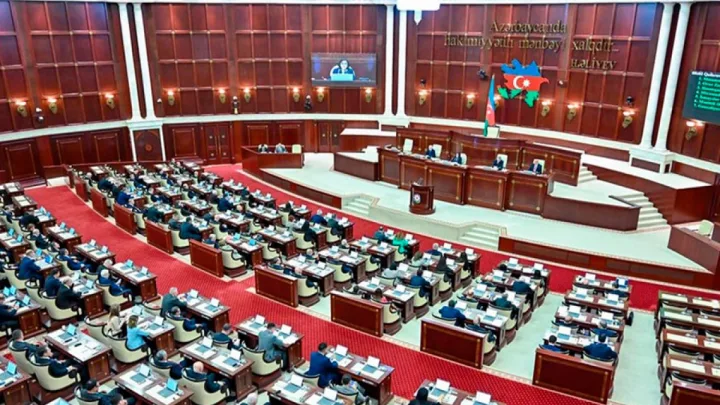
Milli Məclisin növbədənkənar sessiyasının son iclası keçiriləcək - YENİLƏNİB
Bu gün
·
17:28
Hərbçimiz vəfat etdi
Bu gün
·
17:08

Hasil Abbasov üç nəfərə yüksək vəzifə verdi
Bu gün
·
17:06
Şimşək çaxacaq, dolu düşəcək - XƏBƏRDARLIQ
Bu gün
·
17:04

Əli Əsədov Rusiyanın səhiyyə naziri ilə görüşdü
Bu gün
·
16:47
Rafael Ağayevə ağır itki üz verdi
Bu gün
·
16:35

Paytaxtda maşından meyit tapıldı
Bu gün
·
16:25

Azərbaycanda bank kartları ilə bağlı mühüm açıqlama
Bu gün
·
16:08
“Azərsun Holdinq” şəkər çuğunduru emalı həcmini 800 min tona qaldıracaq
Bu gün
·
15:54

Moda dizayneri Kamilla Məmmədzadə "Yes Couture"brendi ilə birlikdə Azərbaycan xalçalarından ilhamlanan kolleksiyasını təqdim etdi – FOTO
Bu gün
·
15:50

Salahın meneceri Türkiyədə: Bu kluba keçir
Bu gün
·
15:33