


TESS the Exoplanet Hunter Sent Home the First Images From Its Mission

By systematically observing the minuscule ways in which planets transiting across their stars obscure light from the stars, scientists at NASA and MIT’s Kavli Institute for Astrophysics and Space Research can get a better idea of the conditions on those planets. Using TESS to catalog and investigate these stars could be humans’ best chance at discovering habitable worlds beyond our own, as closer observations will soon reveal more information about the size of their orbiting planets, the distances between the planets and stars, and their orbital periods.
Over two years, TESS will survey 85 percent of the sky divided into 26 sectors — 13 in the south for one year and 13 in the north for another year — gathering data about transiting planets that will inform future investigations of exoplanets with more advanced space telescopes. This systematic survey of the sky sets TESS apart from other telescopes since it will essentially be mapping out the entire sky.
TESS captured these four images with four different cameras (the black lines are gaps between camera detectors), which will eventually help NASA and MIT scientists identify exoplanets. In the images are a handful of known galactic clusters, stars with transiting planets, and full constellations.
“In a sea of stars brimming with new worlds, TESS is casting a wide net and will haul in a bounty of promising planets for further study,” said Paul Hertz, astrophysics division director at NASA Headquarters in Washington. “This first light science image shows the capabilities of TESS’ cameras, and shows that the mission will realize its incredible potential in our search for another Earth.”
TESS builds on the previous work of the Kepler and TRAPPIST telescopes, which have been instrumental in identifying exoplanets. With its unique observational pattern, TESS will cover almost the entire sky over the course of two years, providing scientists with an unprecedented catalog of data on stars with transiting planets.
Once the James Webb Space Telescope is up and running, NASA scientists will be able to use it to further investigate the stars and planets identified by TESS. Unfortunately, the telescope’s launch has been repeatedly delayed by technical issues arising from “human error, embedded problems in existing hardware, spacecraft integration, unrealistic expectations, and employee morale,” as Inverse previously reported. At this point, its scheduled launch is in 2021.
For now, TESS’s first images show its promise as an exoplanet observation. But without the James Webb Space Telescope, we may be left with a comprehensive list of transiting exoplanets and no way to dig in further.
Müəllif
Metbuat.az
Qaynar xətt
0552252950

Həmçinin oxu
Süni intellekt üçün internet “Bakcell”dən
en.ictnews.az
DİGƏR XƏBƏRLƏR
Daha çox »


Top xəbərlər






Layihələr









Son xəbərlər

Nazir ona vəzifə verdi
Bu gün
·
18:18
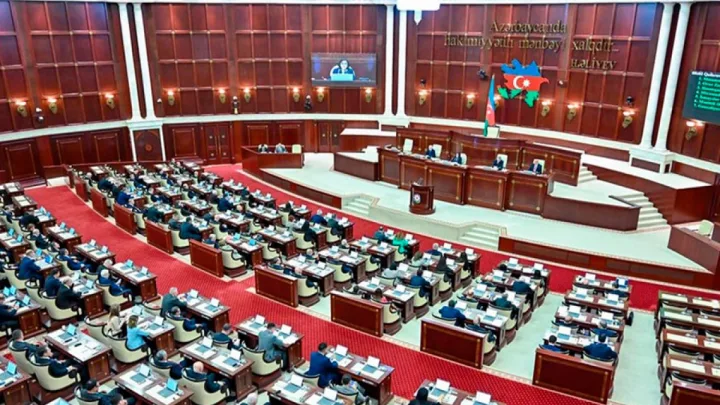
Milli Məclisin növbədənkənar sessiyasının son iclası keçiriləcək - YENİLƏNİB
Bu gün
·
17:28

Hərbçimiz vəfat etdi
Bu gün
·
17:08

Hasil Abbasov üç nəfərə yüksək vəzifə verdi
Bu gün
·
17:06
Şimşək çaxacaq, dolu düşəcək - XƏBƏRDARLIQ
Bu gün
·
17:04

Əli Əsədov Rusiyanın səhiyyə naziri ilə görüşdü
Bu gün
·
16:47

Rafael Ağayevə ağır itki üz verdi
Bu gün
·
16:35

Paytaxtda maşından meyit tapıldı
Bu gün
·
16:25

Azərbaycanda bank kartları ilə bağlı mühüm açıqlama
Bu gün
·
16:08
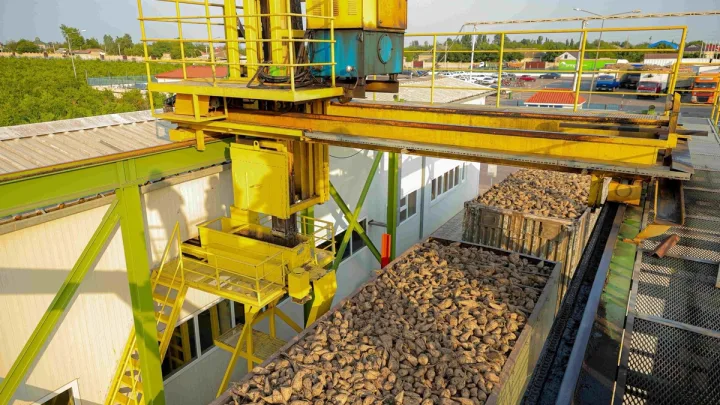
“Azərsun Holdinq” şəkər çuğunduru emalı həcmini 800 min tona qaldıracaq
Bu gün
·
15:54

Moda dizayneri Kamilla Məmmədzadə "Yes Couture"brendi ilə birlikdə Azərbaycan xalçalarından ilhamlanan kolleksiyasını təqdim etdi – FOTO
Bu gün
·
15:50

Salahın meneceri Türkiyədə: Bu kluba keçir
Bu gün
·
15:33

Oğuzda meyit tapıldı
Bu gün
·
15:25
Geomaqnit qasırğası olacaq
Bu gün
·
15:05

İstedadlı futbolçu qərarını verdi
Bu gün
·
14:47